





Most drivers never think about their alternator until something stops working. Maybe the headlights start dimming. Maybe the battery warning light appears on the dashboard. Sometimes the vehicle simply refuses to start one morning.
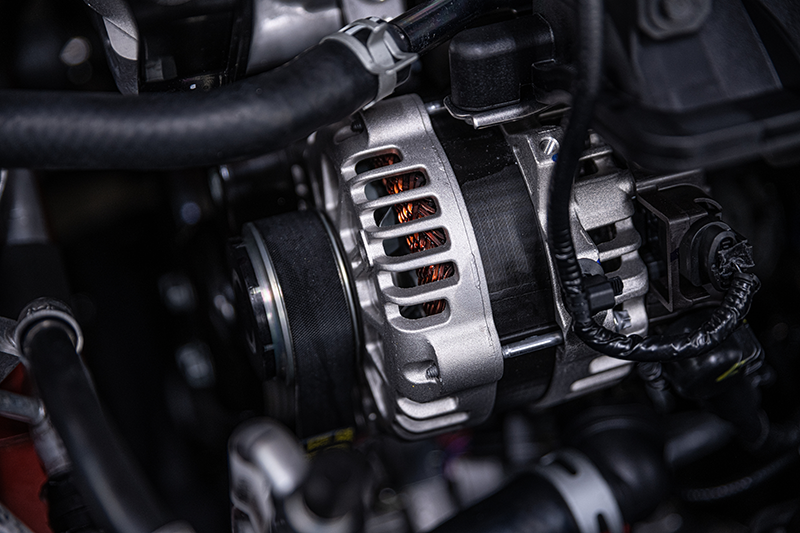
The truth is that your alternator is one of the hardest-working components in your vehicle. It powers the electrical systems you rely on every day and helps keep your battery charged while you drive. When it begins to fail, your vehicle will usually give you a few warning signs before it leaves you stranded.
The Alternator Is the Heart of Your Vehicle’s Electrical System
While the battery gets your vehicle started, the alternator takes over once the engine is running. Its job is to generate electricity and distribute power throughout the vehicle.
Everything from your headlights and touchscreen to your power windows and climate control system depends on the alternator doing its job properly. At the same time, it continuously recharges the battery so it’s ready for the next start.
Without a functioning alternator, even a healthy battery will eventually run out of power.
How an Alternator Creates Electricity
The alternator is driven by the engine through a belt, commonly called the serpentine belt. As the belt turns, it spins internal components inside the alternator that generate electrical current.
That electricity is then converted into a form your vehicle can use and regulated to maintain a consistent voltage level. This allows all of your vehicle’s electrical systems to operate reliably while protecting sensitive electronics from voltage fluctuations.
It’s a surprisingly elegant system, and one that works every time you drive without demanding much attention.
Common Signs of Alternator Trouble
One of the earliest warning signs is the battery-shaped light on your dashboard. Despite its appearance, that light often points to a charging system issue rather than a battery problem.
You may also notice headlights that appear dimmer than normal or flicker unexpectedly. Interior lights can behave similarly, especially when additional electrical accessories are being used.
Some drivers notice that power windows move more slowly than usual or that the infotainment system responds sluggishly. In more advanced cases, the vehicle may struggle to start or stall after starting because the battery is no longer receiving a charge.
A failing alternator can also produce unusual sounds. Grinding noises may indicate worn internal bearings, while whining sounds can point to other internal component issues.
Why Prompt Repairs Matter
A failing alternator rarely fixes itself. In fact, the longer the problem goes unaddressed, the greater the likelihood of additional issues.
When the alternator stops charging properly, the battery must supply all electrical power on its own. Eventually, the battery becomes depleted, leaving the vehicle unable to start or continue running.
Addressing charging system concerns early often helps prevent unexpected breakdowns and can protect other electrical components from unnecessary stress.
Professional Testing Takes the Guesswork Out
The challenge with electrical problems is that several symptoms can overlap. A weak battery, damaged wiring, or a failing alternator can produce similar warning signs.
Fortunately, a professional charging system inspection can quickly identify the source of the problem. Technicians can test battery health, alternator output, and related components to determine exactly what needs attention.
That means less guessing and a faster path back to reliable transportation.
Visit Grand Rapids Chevrolet for Alternator Service
If you’ve noticed a battery warning light, dim headlights, slow electrical accessories, or difficulty starting your vehicle, it may be time for a charging system inspection. The service team at Grand Rapids Chevrolet can diagnose alternator and battery concerns and help keep your Chevy performing reliably.
Connect with us


- 2025 sierra
- 2025 silverado
- 2026
- 2026 Equinox
- 2026 silverado
- 2026 Suburban
- 2026 Tahoe
- 2026 Traverse
- Buyers FAQs
- chevrolet silverado 1500
- chevrolet suv
- chevrolet trucks
- Exhaust
- gmc sierra
- gmc trucks
- gmc yukon
- GRAND RAPIDS Chevrolet Dealer
- Grand Rapids Chevrolet GMC Service
- GRAND RAPIDS Chevrolet Service
- grand rapids gmc dealer
- grand rapids oil change
- grand rapids suv
- GRAND RAPIDS Used Cars
- Headlights
- Service
- silverado 1500