





Oil filters are not often thought about. No one brags about them at a stoplight. But they do the kind of work that keeps everything else from falling apart. Understanding how an oil filter works is less about curiosity and more about avoiding problems that get expensive fast. It is one of the simplest parts on the vehicle. It is also one of the easiest to neglect.
What Is an Oil Filter?
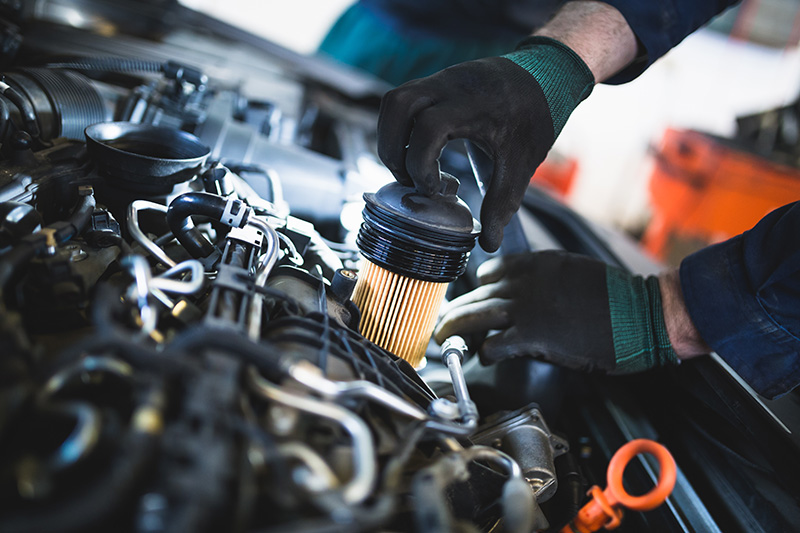
An oil filter is exactly what it sounds like. It cleans the oil that moves through your engine. That oil picks up debris as it circulates. Tiny metal particles, dirt, and sludge all end up in the system over time.
The filter catches that material before it can keep moving through the engine. Without it, those particles would continue circulating, slowly grinding away at internal components.
How Do Oil Filters Work?
Oil flows through the filter under pressure. Inside, a pleated material, usually paper or a synthetic blend, traps contaminants while allowing clean oil to pass through.
Most filters also include a bypass valve. If the filter becomes clogged, that valve opens to keep oil moving. It is not ideal, but it is better than cutting off flow entirely.
Why Are Oil Filters Important?
Engines rely on clean oil to reduce friction and manage heat. When contaminants build up, that balance starts to shift.
A functioning oil filter helps:
- Extend engine life
- Maintain fuel efficiency
- Keep performance consistent over time
Ignore it, and the consequences tend to show up slowly, then all at once. Increased wear, reduced efficiency, and eventually damage that could have been avoided with routine maintenance.
How Often Should You Replace Your Oil Filter?
In most cases, oil filters should be replaced every time the oil is changed. For many vehicles, that falls somewhere between 3,000 and 5,000 miles depending on oil type and driving conditions.
Short trips, cold climates, and frequent stop-and-go driving can shorten that interval. In northern Minnesota, those conditions are not unusual.
If there is any doubt, the service team at Grand Rapids Chevrolet GMC can point you in the right direction and keep things on schedule.
What Happens If You Don’t Replace Your Oil Filter?
An old filter does not just stop working. It becomes an active restriction.
Oil flow can decrease. Contaminants can bypass the filter entirely. Internal components begin to wear faster than they should.
Left long enough, the damage becomes serious. In some cases, it leads to engine failure. Not dramatic at first. Just gradual deterioration until something gives out.
Routine maintenance is necessary. Replacing an oil filter on time keeps the engine clean, properly lubricated, and operating as it should. At Grand Rapids Chevrolet in Grand Rapids, MN, express oil change services include the details that matter. Fresh oil, a new filter, and a closer look at the condition of your vehicle so small issues stay small.
Connect with us


- 2025 sierra
- 2025 silverado
- 2026
- 2026 Equinox
- 2026 silverado
- 2026 Suburban
- 2026 Tahoe
- 2026 Traverse
- Buyers FAQs
- chevrolet silverado 1500
- chevrolet suv
- chevrolet trucks
- Exhaust
- gmc sierra
- gmc trucks
- gmc yukon
- GRAND RAPIDS Chevrolet Dealer
- Grand Rapids Chevrolet GMC Service
- GRAND RAPIDS Chevrolet Service
- grand rapids gmc dealer
- grand rapids oil change
- grand rapids suv
- GRAND RAPIDS Used Cars
- Headlights
- Service
- silverado 1500